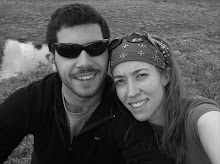
This past weekend Jess, Astro, and I all went to the Canyon on what we like to call “the Gringo Train.” We had along with us three Peace Corps trainees, two travel writers, two Grand Canyon river guides, and two other volunteers. It’s volunteer visit weekend, which explains the trainees and the volunteers. The two travel writers are re-writing a book about Northern Nicaragua and the canyon river guides met the travel writers at a hotel in Somoto and both had their hearts set on visiting the Canyon. Being that I knew the travel writers and we were already planning on visiting the Canyon with our trainees, our group quickly doubled in size, with also cut our taxi costs in half. Therefore, we were all happy. Off we went on Sunday afternoon.
Jess and I made egg salad, tuna salad, and PB&J sandwiches for the Peace Corps side of the group, and the others brought ham and cheese sandwiches that they picked up at Palí, the Somoto grocery store. We also brought some cut up veggies, cheese puffs, and Ranchitas, the Nicaraguan version of Doritos. One of our fellow volunteers was kind enough to share a gigantic bar of chocolate that she had recently received in a package from the States. On top of all that we carried about 10 liters of water. We didn’t eat until we made it to the boat launch, which is about a 40 minute walk from where the taxis let us off. You can imagine the feast we had – the chocolate hadn’t even melted!
From the boat launch it’s either a 5 minute boat ride or a 20 minute scramble across the canyon walls. While the majority of us went for the scramble, Leanne, another Peace Corps Volunteer, chose the boat ride. As you can see in the picture, she had her own private float up the river with a very handsome Nicaraguan boatman.
We made our way back about 4 o’clock and huffed our way out of the canyon by 4:30. Our goal was to get the two travel writers and the two river guides on the 5 o’clock bus out of Somoto. We pulled up to our house at 5:02, and the four travelers ran in, grabbed their bags, and jumped in a taxi. Even though the bus had already left, their taxi driver agreed to speed his way down the Panamerican Highway to catch the bus. We ran into the driver the next day, and sure enough, they caught the bus about 10 minutes further down the road.
Those of us who ended up in Somoto for the evening celebrated a successful canyon visit with tacos and Spanish rice. Delicious.
This being Volunteer Visit Week, Jess and I are being visited by Hannah and Jessie, two Peace Corps Trainees currently living in Carazo, where we lived last year at this time. We’re just supposed to show them a slice of our life, but it’s turning into a very busy week – so they might be getting more than they bargained for. Jess and I are both neck deep in several projects, which is also why we haven’t been blogging nearly as frequently as normal. We will get it back by to once a week soon, though.
Another exciting note, last week some Peace Corps volunteers came across The Travel Channels Andrew Zimmern filming in Nicaragua. They were invited to help out with the show and ended up joining Andrew and his crew for a feast of grilled boa constrictor and armadillo. Look for the show airing on The Travel Channel in June!
More to come, soon!
Here we are on our way into the Canyon. Gringo Parade!

Leanne taking the "easy" way into the canyon. How romantic!

First timers to the canyon.

Wading across the river.

Matt and Astro after a swim.

Here's Jess explaining the finer geological intricacies of the canyon.

On our way back.

Astro took the easy way as we left.

Back up the river.

Home in time for a beautiful sunset.


 The fruity pulp is left to decompose and then is scattered among the coffee plants as a form of fertilizer. As the beans dry in the sun, workers pick through each batch and remove any shells or deformed beans. What’s left is bagged, put on mules, and taken down the mountain to be sold in Estelí. The coffee won’t get roasted until it makes it to its final destination, so at this stage it’s still very yellow, and the Nicas call it “café oro” or gold coffee.

 Once the mud has dried for a week the board can be removed and the oven is ready for use. You may be asking, “what makes this stove any better?” Good question!


 Jess and I would like to wish everybody a fantastic 2009! We have some new year´s resolutions to share with you all, but first we´d like to describe the festivities that took place in Somoto.
 Then the whole thing is cooked down and served over rice with bread. It´s tough to compare the taste to anything we have back home, except for maybe a pulled pork sandwich without the barbecue sauce. It was very rich, to say the least.